In the latest #CBEScaleUp Photo Competition, projects could compete in four categories: Scaling Innovation, People and Skills, Circular Europe, and Creative Focus. Therefore, the LUCRA communication team has collected and curated the best project photos from the consortium at the beginning of the year.
The final selection by the jury took place at the end of January, and we are delighted to announce that one of LUCRA’s submissions was selected as the winner in the category “Circular Europe.”
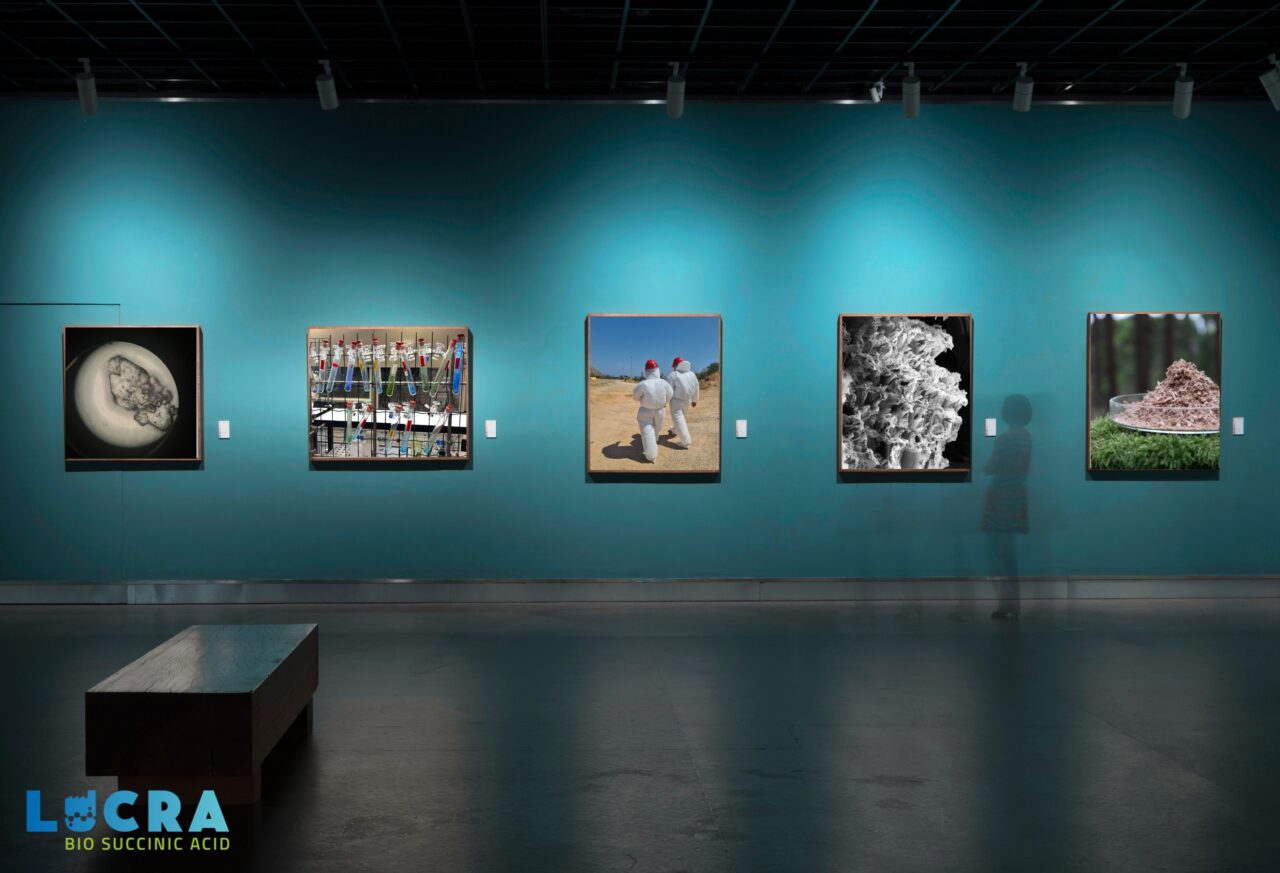
To celebrate this achievement, we are using this opportunity to present a virtual photo exhibition. In addition to the winning image, we are also showcasing several of our favourite submissions from the project.
Each photo tells a story. Together, they offer a glimpse into the people, processes, and ideas behind LUCRA and its contribution to a more sustainable and circular bioeconomy.
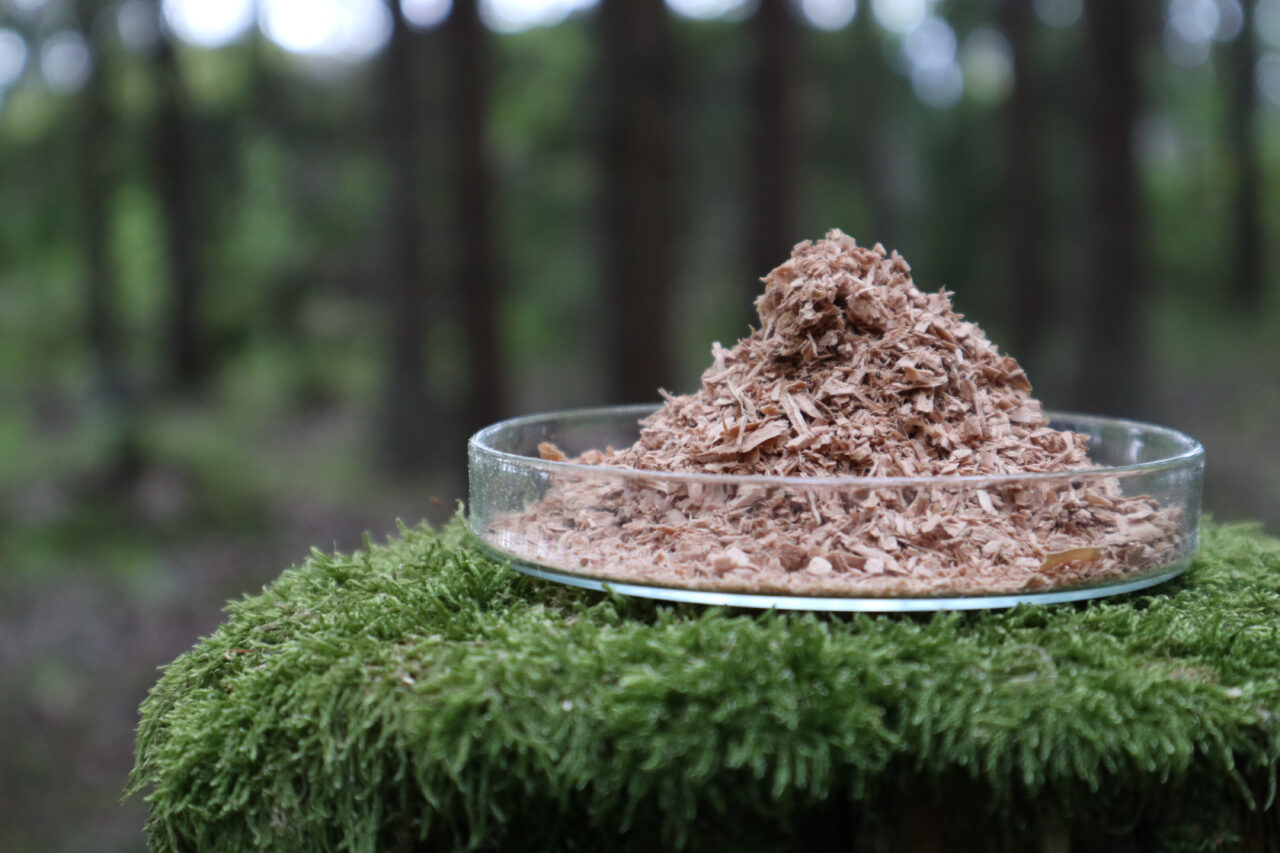
Extracted Sawdust in a Mossy Forest
The winning photo from LUCRA partner Boreal Bioproducts depicts extracted sawdust in a Petri dish placed on a tree stump in a moss-covered forest. It reflects LUCRA’s innovative process of converting waste like sawdust, a wood industry residue, into succinic acid through enzymatic hydrolysis, microbial fermentation, and electrochemical extraction.
As Jaakko Pajunen, CEO of Boreal Bioproducts, explains, the inspiration behind the image lies in a deep respect for nature and its origins:
“We wanted to highlight the naturality and purity of our raw materials, sourced from the pristine boreal forests. In the Nordic region, the relationship with the forest has always been multifaceted. It has provided the essentials for living – the source of livelihood – while also offering a place for mental relief, relaxation, and reflection. Forests are deeply rooted in our cultural and spiritual heritage. By using them sustainably and upgrading side streams into higher-value applications, we aim to honor and preserve all of these dimensions.”
Together, the image and its story emphasize not only technological innovation but also a philosophy – one that respects the forest as both a resource and a legacy.
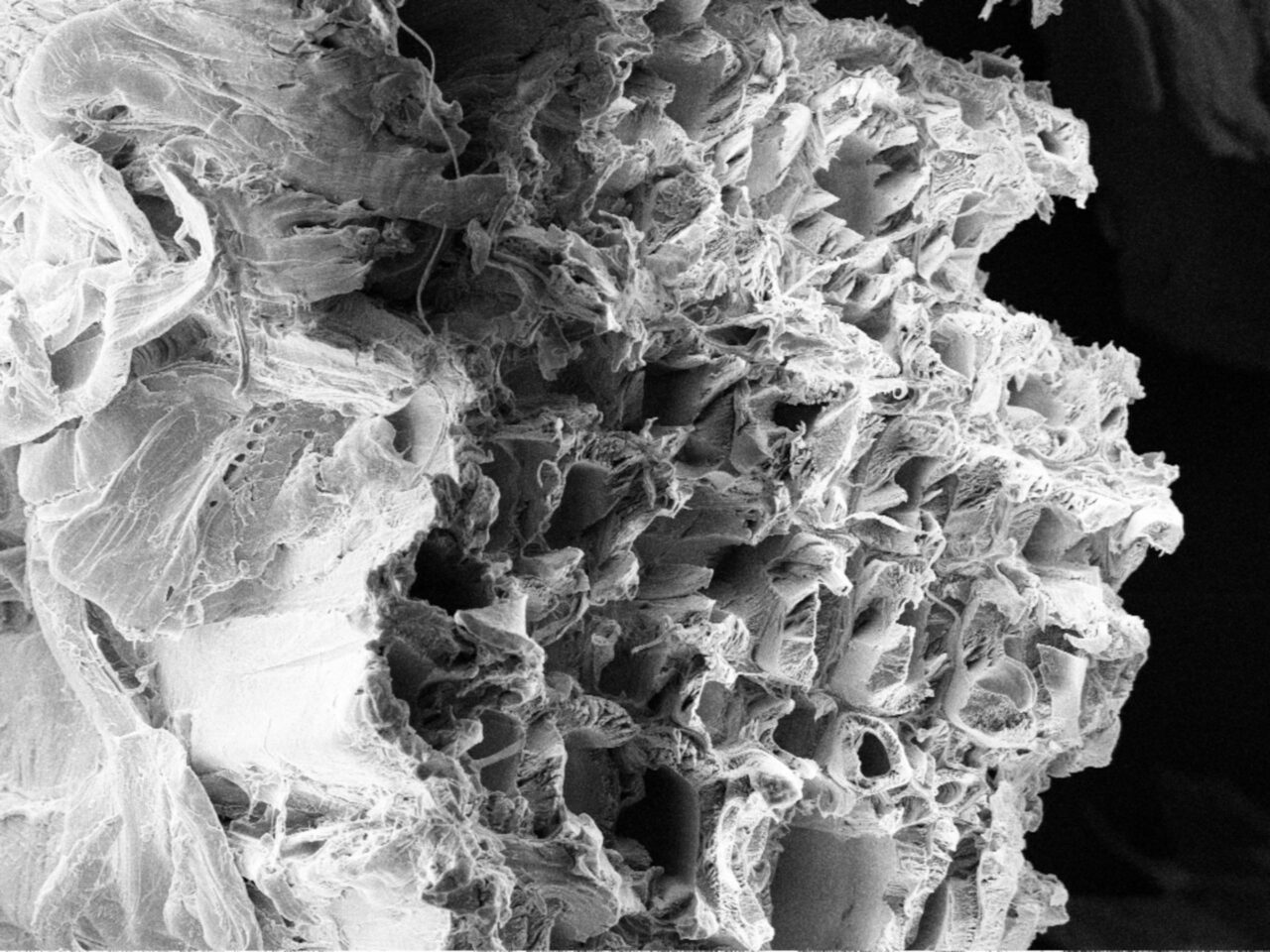
SEM Image of Sawdust
Building on the winning image, we can dive deeper into the material itself. A second photograph from Boreal Bioproducts presents a scanning electron microscope (SEM) image of sawdust, revealing a world that remains invisible to the naked eye.
At this microscopic scale, the surface of a single sawdust particle transforms into a complex landscape of fibers, pores, and irregular structures. These intricate features are not only visually striking but also highly relevant for the LUCRA process. The porous architecture increases the accessible surface area, enabling enzymes to efficiently break down the biomass during hydrolysis and making the subsequent fermentation steps more effective.
What appears as a simple wood residue in the forest thus reveals itself as a highly structured and functional material – one that holds significant potential when viewed through the lens of science and innovation.
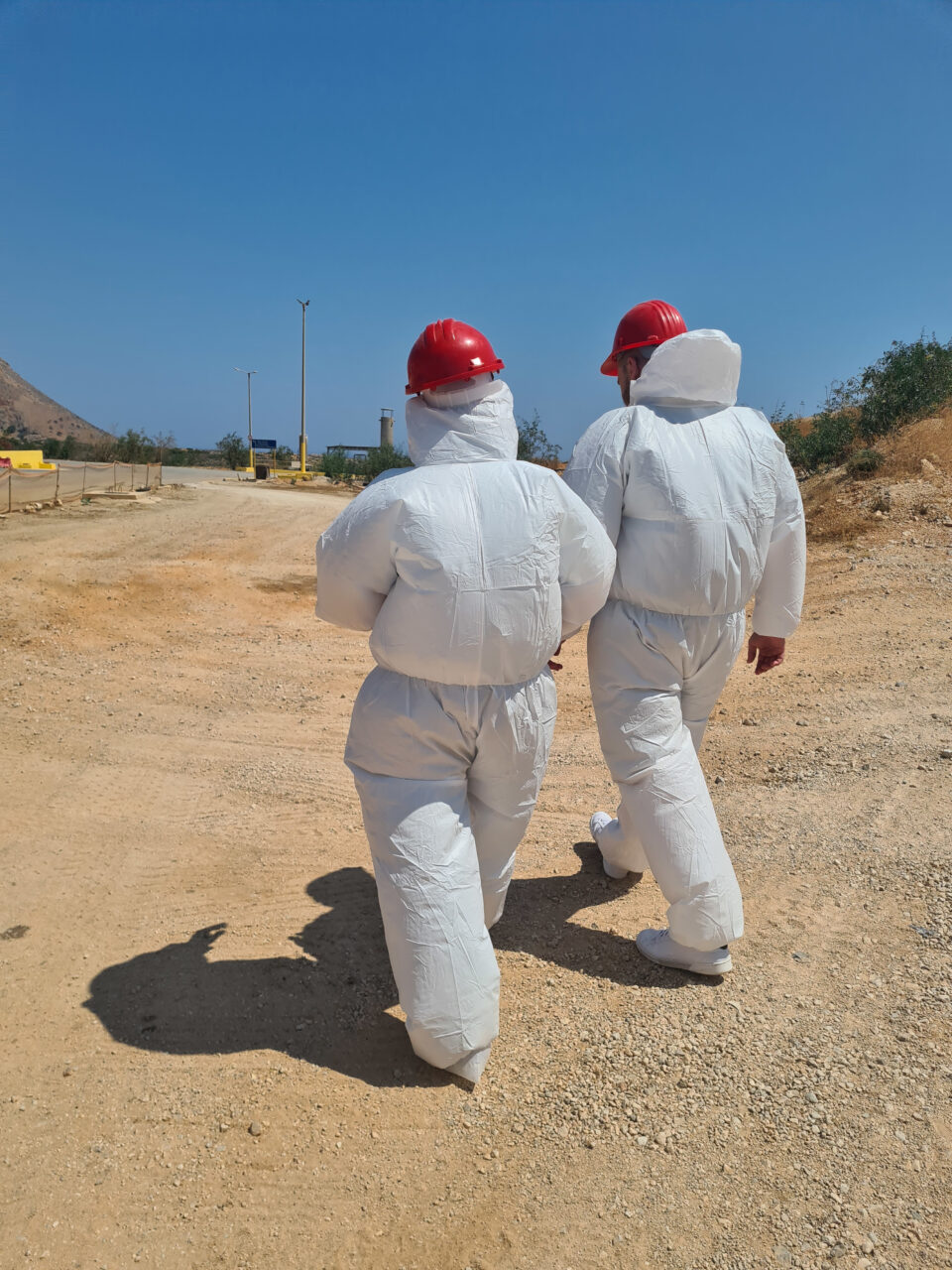
Men on the Moon – Visiting a Recycling Plant
Taken in June under the blazing sun of Chania, this photograph from Steinbeis Europa Zentrum shows a striking moment at the recycling plant, where the heat, the wind, and the protective gear combined to create an almost surreal effect. With temperatures reaching 30°C, the visit to the municipal recycling plant became an experience of contrasts – heat, movement, and discovery.
Guided through the facility, we gained valuable insight into the complexities of managing large-scale recycling operations. Particularly striking was how strongly the system is influenced by the tourist season, with fluctuating waste volumes shaping both logistics and capacity on a daily basis.
As a light wind caught the protective coveralls, they inflated and shifted, giving the figures an almost astronaut-like appearance – hence the title “Men on the Moon.” One lesson became clear very quickly: 30°C and plastic coveralls are a demanding combination.
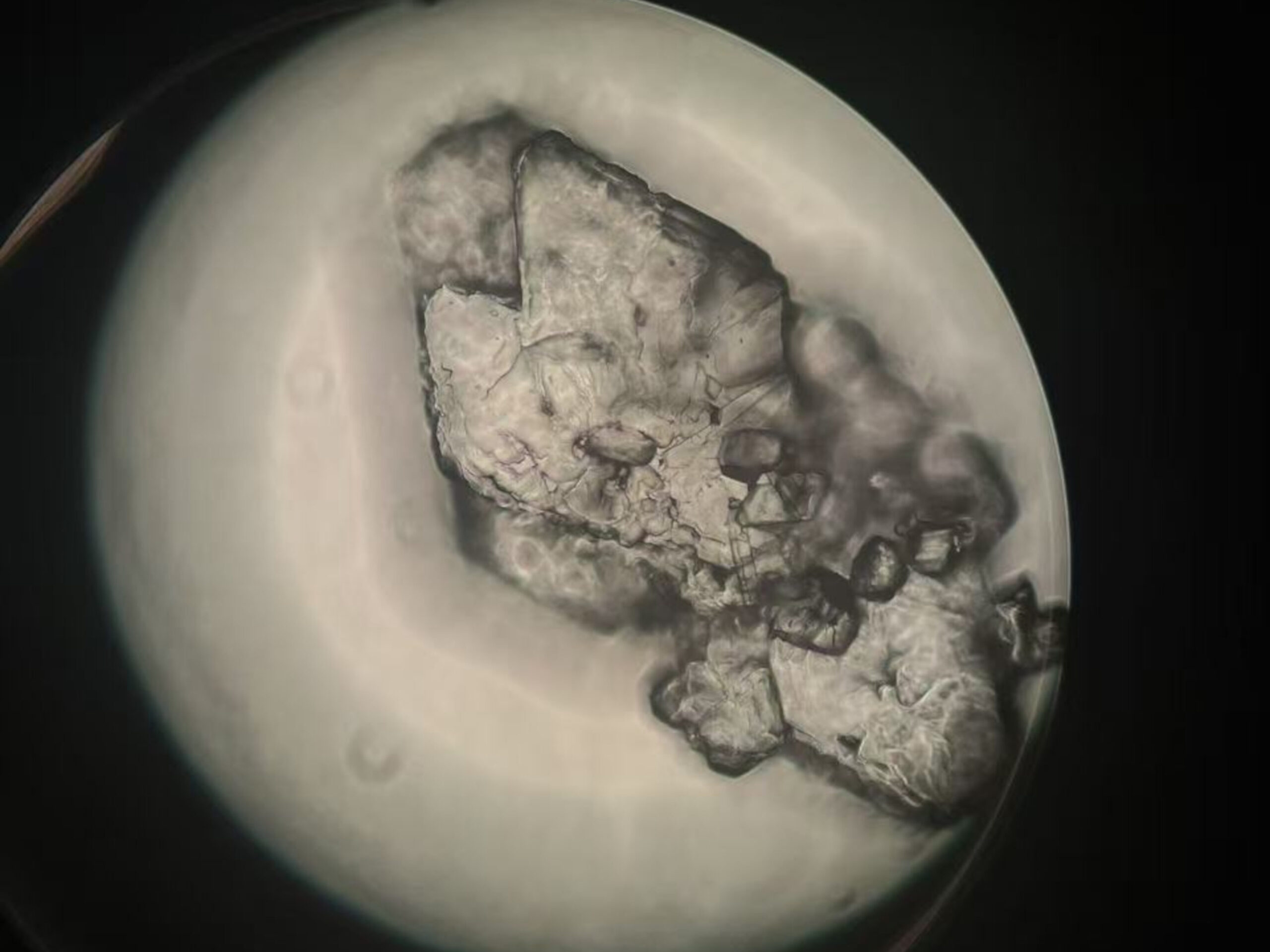
Crystallised Succinic Acid under the Microscope
This striking image from Ghent University shows succinic acid in its crystallised form, as seen under the microscope. Following fermentation and the electrochemical downstreaming process, the succinic acid is purified and concentrated, eventually forming crystals – the solid form that can be further processed into bio-based chemicals and materials.
At the microscopic level, the structured, orderly nature of the crystals stands in stark contrast to the raw, fibrous biomass from which they originated. The image is a compelling reminder of how LUCRA transforms low-value residues into high-value, functional products – from forest to lab to industry.
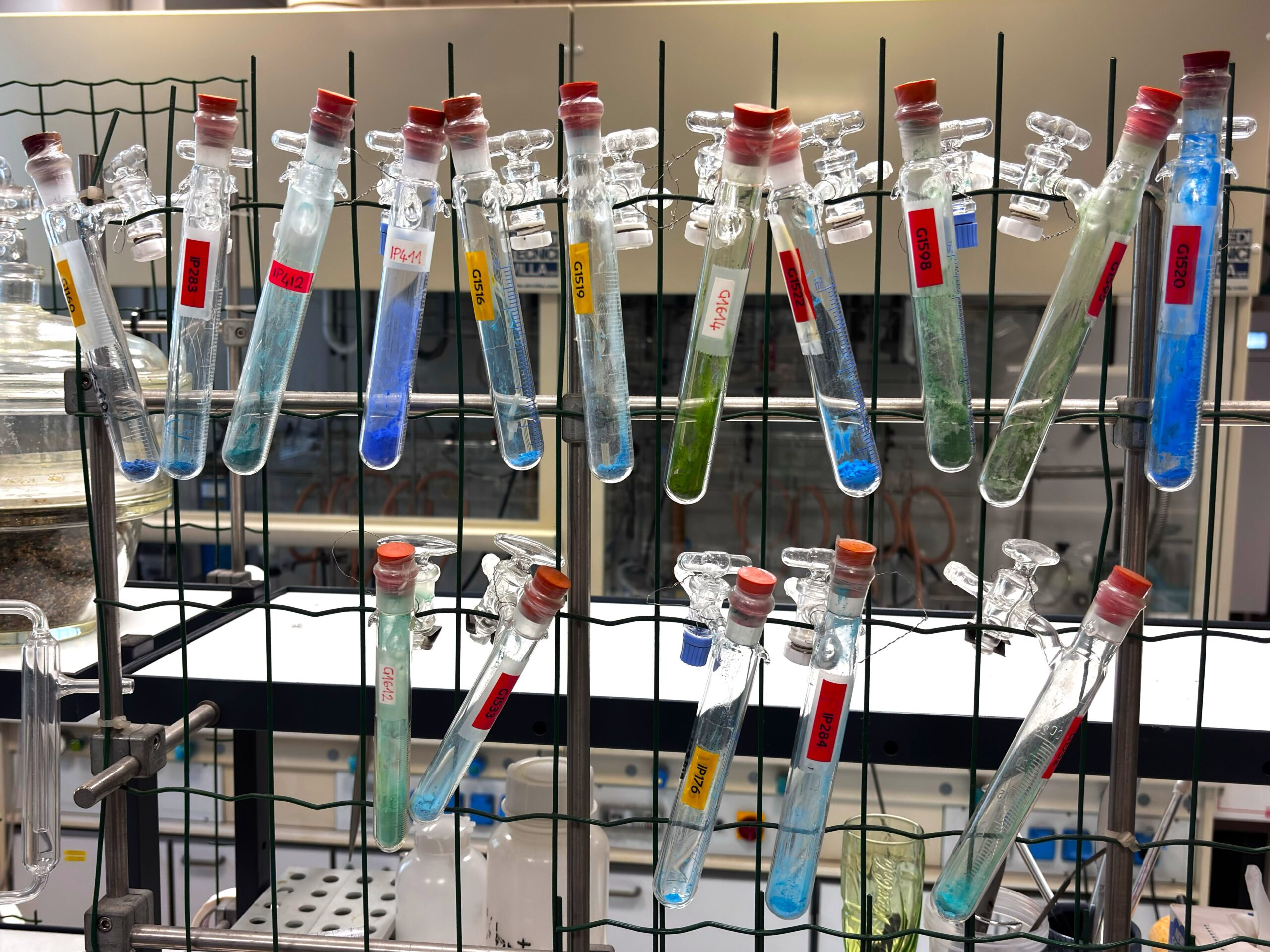
A Palette of Polymer Synthesis
This vibrant image from CNR-SCITEC captures a row of test tubes, each filled with a different colored catalyst used in polymer synthesis. In the LUCRA process, these catalysts play a key role in transforming basic monomers and oligomers into functional polymeric materials with precisely designed properties.
The array of colors reflects not just chemistry in action, but the careful experimentation and control required to tune polymers for specific applications – from packaging and agri-food solutions to advanced composites and bio-based materials. Each test tube represents a step in understanding how molecular design, reaction conditions, and processing influence the structure and performance of the final polymer.
At first glance, it’s a simple laboratory scene. Yet, at a closer look, it embodies the creativity and precision behind turning raw chemical building blocks into materials that are both functional and sustainable.
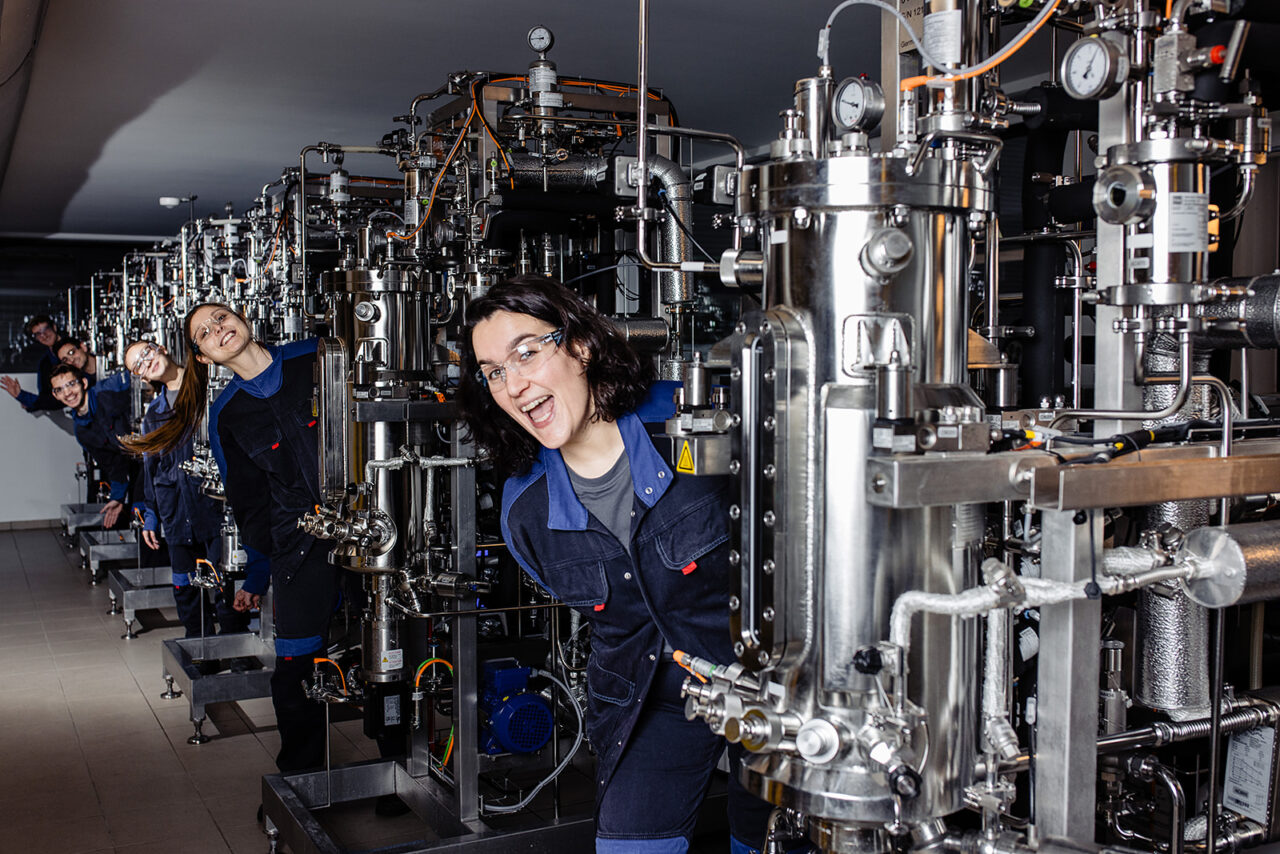
Scaling Up with a Smile
This lively snapshot was taken at the Bio Base Europe Pilot Plant (BBEPP), LUCRA’s hub for scale-up and pilot operations. The photo shows a motivated, young team peeking out from behind a row of 30 L fermentation reactors.
BBEPP plays a crucial role in LUCRA by bridging the gap between laboratory experiments and industrial production. Here, scientists and engineers refine fermentation conditions, monitor microbial performance, and optimize processes to ensure that the biomass-to-succinic-acid conversion works efficiently on a larger scale.
The image captures not only the technical side of scale-up but also the collaborative and spirited atmosphere that drives innovation. It’s a reminder that transforming raw biomass into high-value chemicals is as much about teamwork, creativity, and enthusiasm as it is about enzymes and reactors.
In the latest #CBEScaleUp Photo Competition, projects could compete in four categories: Scaling Innovation, People and Skills, Circular Europe, and Creative Focus. Therefore, the LUCRA communication team has collected and curated the best project photos from the consortium at the beginning of the year. The final selection by the jury took place at the end…
LUCRA as Circular Europe category winner of the #CBEScaleUp Photo Competition
At the beginning of the year, LUCRA participated in the #CBEScaleUp Photo Competition, highlighting how CBE JU-funded projects are bridging the gap between innovation and real-world market deployment. With over 300 submissions from 50 projects across five categories, this edition saw record participation. We are thrilled to share that a LUCRA submission was selected as the winner…
A closer look at the LUCRA process steps
As Europe transitions toward a more circular and bio-based economy, the LUCRA project is demonstrating how advanced technologies can turn waste into valuable materials. At the center of this transformation is bio-based succinic acid, a chemical building block with a wide range of industrial uses. LUCRA’s innovation lies not only in what it produces, but…
LUCRA participates in the #CBEScaleUp Photo Competition
The #CBEScaleUp Photo and Video Competition showcases how CBE JU-funded projects are successfully bridging the gap between innovation and market deployment. Projects can compete in four categories: Scaling Innovation, People and Skills, Circular Europe, and Creative Focus. In addition, participants may submit a short video. Over the past few weeks, the LUCRA communication team has…
Why electrification will be key for sustainable bioproduction
When we hear the word electrification, we mostly think of electric cars and solar panels. However, electrification can also have a major impact on the biobased economy. Over the past years, we have seen a tremendous evolution in our ability to produce biobased products that have real impact in society, ranging from fine chemicals to…
LUCRA Consortium Meeting in Ghent, Belgium
From December 2-3, the LUCRA partners came together to share project updates and challenges during the second half of the project. With 2026 marking the last full year of LUCRA, the discussions placed a stronger focus on exploitation, scale-up strategies, and business models. During an internal workshop, partners worked on these key topics, aligning on…
LUCRA Article in Projects Magazine – Special Bioeconomy Edition
The LUCRA project is featured in the latest bioeconomy-focused edition of Insight Media’s Projects Magazine. The article, titled “LUCRA: Scaling bio-based succinic acid from side streams and waste for drop-in polymers”, was developed together with project coordinator Tanja Meyer from Bio Base Europe Pilot Plant and highlights key insights and results. Europe’s bioeconomy is at…
LUCRA joins the roundtable at the BioReCer Final Event
On 29 October 2025, the BioReCer project invited stakeholder from the bio-based industries, research, certification and standardisation, and (consumer) organisations to its final event at the Ciudad de la Cultura in Santiago de Compostela, Spain. In various presentations BioReCer partners showcased key results, explained the sustainability and circularity framework (University of Santiago de Compostela), discussed…
Between Science, Adventure and Environmental Responsibility
This article shares how LUCRA scientist Gaétan Herold and his supervisor Dr. Mariane Schneider (Ghent University) navigate the paradox of working towards a fossil-free future while questioning the carbon cost of their own scientific travels – and how turning a dilemma into an adventure can open up new perspectives. Phasing out fossil fuels is essential…
Why Succinic Acid? Industry Insights from Covestro on Advancing Circular Chemistry
Trash Talk: Join us behind the scenes of Chania’s waste management plant
Out of sight, out of mind. That’s how most of us treat our trash. Once we throw it “away”, it simply disappears, right? The reality is, of course, far more complex. And I’ll admit: I used to know very little about what happens to our waste after the bin. That changed during my studies, when…
LUCRA joins the Biorefine Cluster Europe
We’re proud to become part of this vibrant network of EU projects and experts dedicated to biobased resource recovery and circular economy solutions! The Biorefine Cluster Europe connects initiatives working on nutrient recycling, waste valorization, sustainable agriculture, and more – all aiming to improve sustainable resource management across Europe. This collaboration fosters mutual exchange and…
LUCRA Workshop Recording now on YouTube
The full recording of our LUCRA workshop “Municipal biowaste as feedstock in a sustainable and circular bioeconomy” (June 11, Chania & online) is now on YouTube. Learn more about LUCRA and gain insights from both science and industry on circular bioeconomy solutions! Find all speakers, titles, and timestamps below, as well as in the video…
LUCRA Workshop in Chania: Municipal biowaste as feedstock in a sustainable & circular bioeconomy
On June 11, 2025, the LUCRA consortium hosted a hybrid workshop titled “Municipal biowaste as feedstock in a sustainable and circular bioeconomy” in the scenic harbor city of Chania, Crete, at the Center of Mediterranean Architecture. Organized in collaboration with the Agricultural University of Athens and the local municipal waste company DEDISA SA, the event…
Consortium Meeting in Chania, Greece
From June 11–12, 2025, the LUCRA consortium convened for its latest project meeting in the beautiful city of Chania, Crete. Hosted by the Agricultural University of Athens in collaboration with the Municipality of Chania, the gathering took place at the stunning Center of Mediterranean Architecture, a historic venue that provided an inspiring setting for intensive…
This week, the Agricultural University of Athens (AUA) welcomed LUCRA project coordinator Bio Base Europe Pilot Plant (BBEPP) for a technical visit to exchange insights and align on process development activities. AUA plays a central role in the LUCRA project with a strong focus on several key technical areas. This includes the development of membrane…
Finding Value in LUCRA Biorefinery Side-Streams
Next time you walk through a park, notice the grass. Is it nicely mowed, or does it look messy? How would you like it to look? Usually, a nicely mowed lawn in a park or garden is aesthetically pleasant, but in nature, a nicely mowed and ordered lawn looks strange. Human beings are sharp recognizers…
Study Visit of the Bio Base Europe Pilot Plant with LUCRA Partner Boreal Bioproducts
As part of the TechTour Circular 2025 event, held in Ghent, Belgium from April 23–24, participants were invited to take part in a guided tour of the Bio Base Europe Pilot Plant (BBEPP) – one of Europe’s leading open-access pilot facilities for scaling up biobased processes. Boreal Bioproducts (Montinutra Ltd), key partner in the LUCRA…
LUCRA joins the European Bioeconomy Network (EuBioNet)
We are pleased to announce that the LUCRA project has officially joined the European Bioeconomy Network (EuBioNet) – a proactive alliance of over 160 EU-funded projects and initiatives working to advance the bioeconomy across Europe. EuBioNet serves as a collaborative platform that fosters knowledge sharing, networking, and the coordination of joint communication and outreach efforts.…
2nd LUCRA Newsletter
The second issue of the LUCRA newsletter is published! Let us share with you what has happened in the past months of LUCRA and subscribe for future editions (see bottom of the page).
Turning Trash into Treasure: How Sawdust and Organic Waste Could Change the Game
Did you know that sawdust from wood processing and organic waste from household could become the secret ingredients for making high-value chemicals? The LUCRA project is on a mission to transform these streams into something much more valuable than just firewood or landfill fodder. The LUCRA Project: Giving Waste a Second Life The LUCRA project,…
LUCRA General Assembly Meeting in Birmingham, UK
Birmingham, UK – January 15-16, 2025 – In the mid of January 2025, the LUCRA project partners gathered in Birmingham for their fourth consortium meeting at the Birmingham Energy Innovation Centre (BEIC). The meeting served as a platform to update partners on the progress of the different work packages and to discuss the next steps.…
1st LUCRA Newsletter
The first issue of the LUCRA newsletter is published! Let us share with you what has happened in the past months of LUCRA and subscribe for future editions!
LUCRA General Assembly meeting in Turku, Finland
Turku, Finland – July 3, 2024 – At the beginning of July, the LUCRA project partners gathered in Turku for their third consortium meeting, hosted by project partner Boreal Bioproducts (Montinutra Ltd). The meeting served as a platform to update partners on the progress of the different work packages and to discuss the next steps.…
LUCRA Showcases Pioneering Contributions at the 32nd European Biomass Conference & Exhibition
Marseille, France – June 27, 2024 – LUCRA, a Circular Bio-based Europe Joint Undertaking (CBE JU) funded initiative in sustainable biochemical solutions, is proud to announce its significant participation in the 32nd European Biomass Conference & Exhibition (EUBCE), held from June 24-27, 2024 in Marseille, France. This prestigious event, renowned as the leading platform for…
LUCRA stakeholder’s consultation survey!
The stakeholder’s engagement is essential for the successful implementation of our project, for that reason, as a first consultation activity, the LUCRA consortium has developed an online survey for stakeholders (e.g. Industry, Research & Science, Public Authorities, Civil Society, etc.). In this survey, you will be asked questions to help us gather insights on the…
LUCRA General Assembly Meeting in Madrid, Spain
From the 6th to 7th of February 2024, the LUCRA partners met in the beautiful city of Madrid (Spain) for their second project meeting in Month 8 of the project. The meeting was organized by the project partner FCC Medio Ambiente and took place in their headquarters in Las Tablas, Madrid. During the one-and-a-half-day meeting,…
Transforming Organic Waste
In July 2023, the first phase of the four-year Circular Bio-based Europe Joint Undertaking (CBE JU) Project LUCRA kicked-off in Ghent. LUCRA aims to demonstrate a unique process to convert underutilized organic fraction of municipal solid waste (OFMSW) and wood waste into bio-based succinic acid. The project is set to provide the bio-based industry with…
The project is supported by the Circular Bio-based Europe Joint Undertaking and its members.
Funded by the European Union. Views and opinions expressed are however those of the author(s) only and do not necessarily reflect those of the European Union or CBE JU. Neither the European Union nor the CBE JU can be held responsible for them.
This work was also co-funded by UK Research and Innovation (UKRI) under the UK government’s Horizon Europe funding guarantee grant number 10082169.